Walk from your Pollensina villa to dream spots
Nine walks within easy reach of Pollensa — from an hour’s stroll to a hidden cove to the old pilgrim road over the mountains to Lluc. For a walking-focused stay, browse our Pollensa villas and walk-to-the-beach villas.
Last updated: October 2026
What are the best hikes near Pollença (Pollensa)?
For easy walking, try the Vall d’en March or Cala Bóquer. Puig de Maria, Puig de Santuiri and the Talaia d’Albercutx are short climbs with wide views; the Talaia de la Victòria and the pilgrim road to Lluc make fuller days. Cavall Bernat is for experienced scramblers only.
Castell del Rei and Cala Castell are currently closed to hikers.
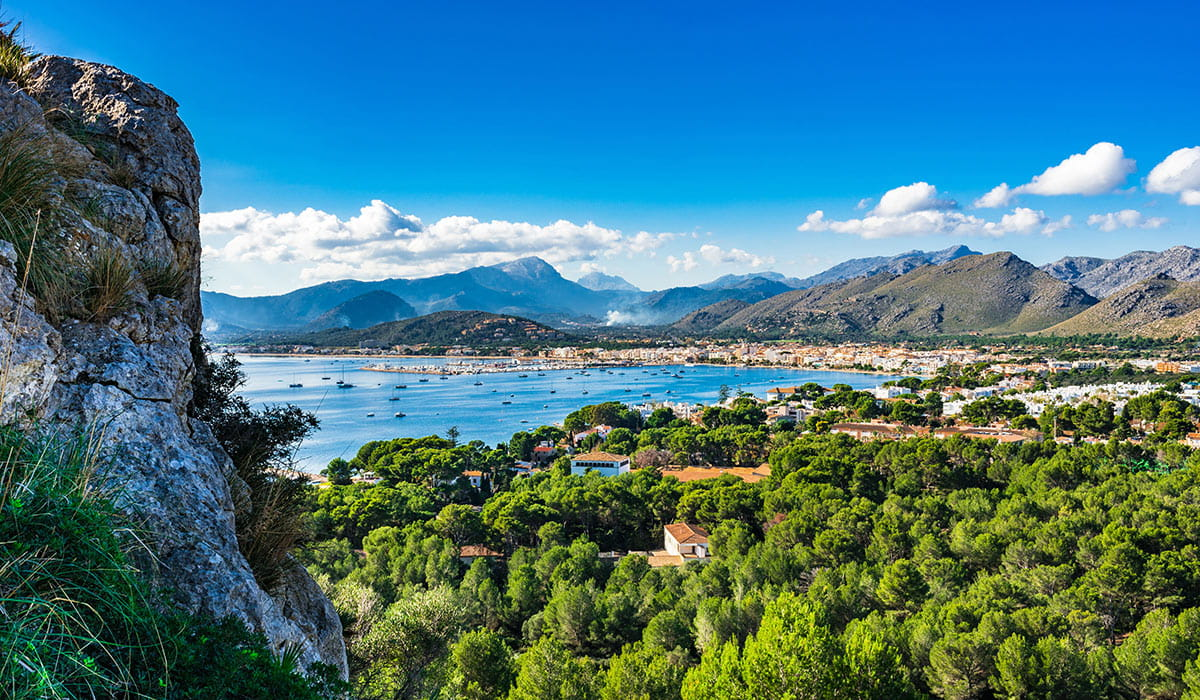
The north of Mallorca is where the Serra de Tramuntana meets the sea, and it gives Pollensa something few Mediterranean towns can claim: world-class walking that begins, quite literally, at the end of the street. You can leave your villa after breakfast, climb to a medieval watchtower or a hilltop hermitage, swim in a cove reached only on foot, and be back at the pool by mid-afternoon.
These are the nine routes we recommend most often to our guests. They range from gentle valley lanes suitable for families to a ridge scramble best left to experienced mountain walkers. Spring and autumn are the finest seasons; in summer, start early, carry more water than you think you need, and save the shadeless climbs for another visit.
| Route | Distance | Time | Level | Start |
|---|---|---|---|---|
| 1. Cala Bóquer | 6 km return | 1.5–2 hours | Easy | Bóquer valley, Port de Pollença |
| 2. Talaia d’Albercutx | 4 km return | 1–1.5 hours | Easy to moderate | Coll de la Creueta, Formentor road |
| 3. Talaia de la Victòria | 7 km return | 2.5–3 hours | Moderate | Ermita de la Victòria, Alcúdia |
| 4. Ternelles valley | Guided visits only — castle and cove closed to hikers | Ternelles, Pollensa | ||
| 5. Cavall Bernat | 6 km return | 4–5 hours | Challenging — experienced walkers only | Cala Sant Vicenç |
| 6. Puig de Maria | 3 km return | 1–1.5 hours | Easy to moderate | Southern edge of Pollensa town |
| 7. Puig de Santuiri | — | — | Easy to moderate | Picnic area at the foot of the hill, Pollensa |
| 8. Vall d’en March | 8 km return | 2–2.5 hours | Easy | Camí de la Vall d’en March, Pollensa |
| 9. Pilgrim road to Lluc | About 18 km one way | 5–6 hours | Moderate to challenging | Pollensa town (finish at Lluc Monastery) |
1. Cala Bóquer
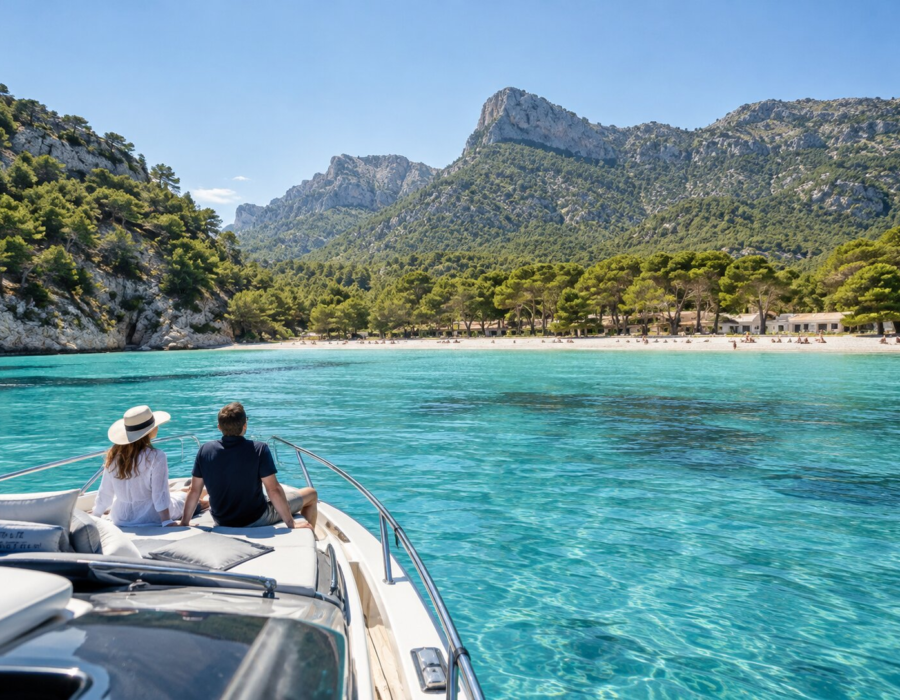
The classic first walk of any stay in Pollensa. From the edge of Port de Pollença, a broad track passes the old Bóquer farmhouse and enters a wild, rocky valley pinched between two limestone ridges. Wild goats watch from the crags, and in spring the valley is one of the best birdwatching spots on the island — look for Eleonora’s falcons and blue rock thrushes. The path descends gently to Cala Bóquer itself, a small stony cove of remarkably clear water. There is no shade and no beach bar, which is precisely its charm. Bring water shoes for swimming.
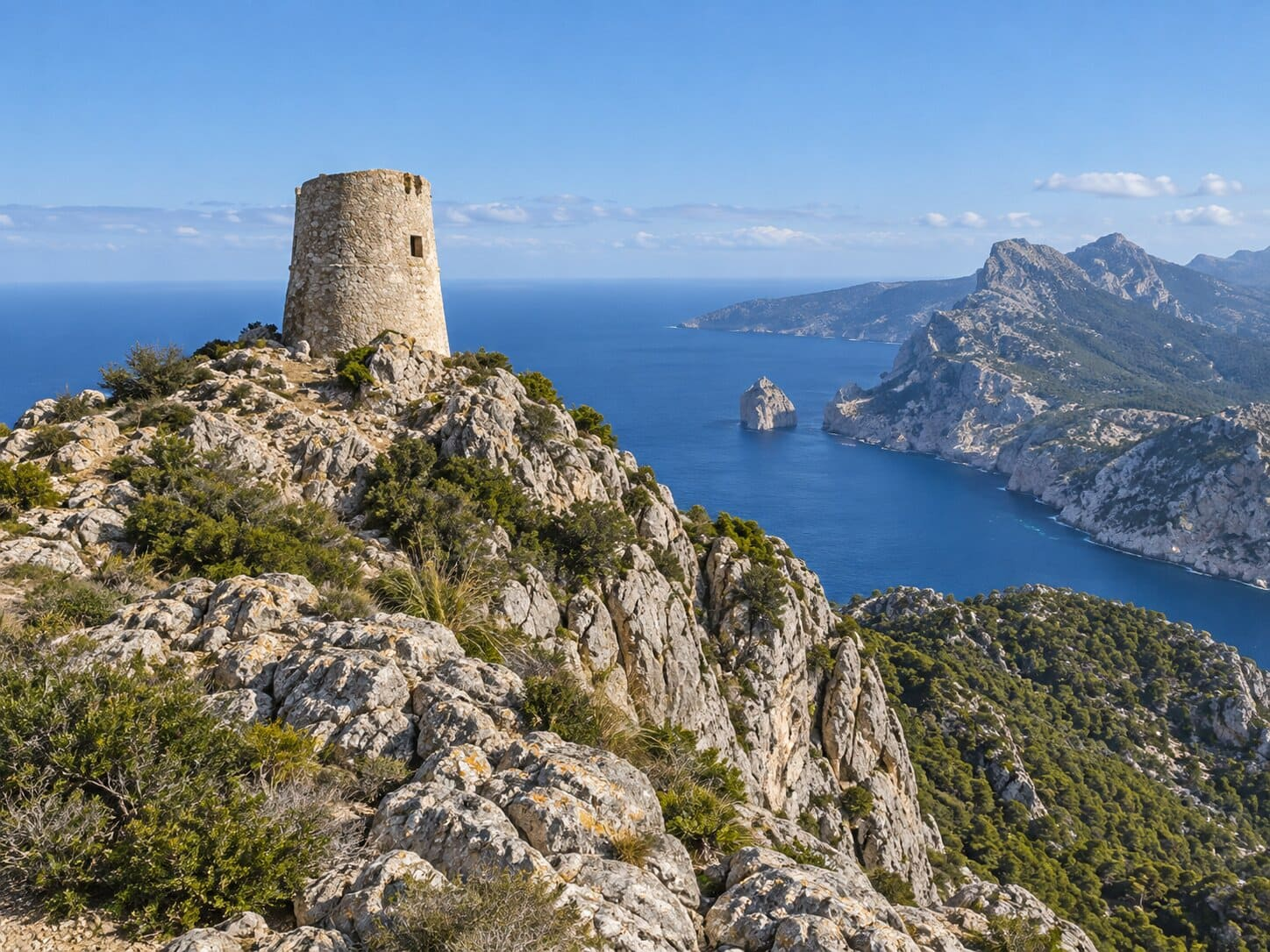
2. Talaia d’Albercutx
Perched above the Mirador des Colomer on the road to Formentor, this sixteenth-century watchtower was built to warn of pirate raids — and its builders chose the finest viewpoint in northern Mallorca. From the Coll de la Creueta car park, follow the old paved military road as it winds up to the tower. The final ladder to the tower roof rewards you with a full 360-degree panorama: the bays of Pollensa and Alcúdia on one side, the cliffs of Formentor and the open sea on the other. Go at the end of the day if you can — sunset here is worth the wait.
3. Talaia de la Victòria
A short drive around the bay, the Victòria peninsula juts out between Pollensa and Alcúdia, and its highest point — the Talaia, at 445 metres — surveys both. The trail climbs from the honey-coloured hermitage of La Victòria through pine forest onto open ridgeline, with the Formentor peninsula ranged across the water like a stage set. It is a proper little mountain walk with a well-made path throughout. Finish with lunch on the terrace at the hermitage restaurant, one of the loveliest tables in the north.
4. Ternelles valley (guided visits only)
North of Pollensa town, the private Ternelles valley runs green and silent toward one of the most secluded coves on the island, watched over by the ruins of the Castell del Rei, a clifftop castle that was the last Mallorcan stronghold to fall in the medieval conquests. For now, though, neither the castle nor Cala Castell can be reached on foot. Following rulings by the Balearic High Court and the Supreme Court, the public right of way through the Ternelles estate no longer applies, the town hall stopped issuing walking authorisations in January 2018, and the barriers remain closed. The valley itself can be visited on a guided visit arranged through the Fundación Vida Silvestre Mediterránea (FVSM); these visits do not enter the protected zones around the castle and the cove.
Sources: Última Hora, 26 December 2025 and 9 March 2026; Fundación Vida Silvestre Mediterránea.
5. Cavall Bernat
The serrated ridge of the Serra del Cavall Bernat rises straight from the sea above Cala Sant Vicenç, and traversing it is one of the great mountain days of northern Mallorca. This is not a stroll: the route involves sustained scrambling on exposed limestone, some route-finding, and a head for heights. The reward is a knife-edge line between sky and sea, with vertical views down to the coves below that few visitors ever witness. Only for fit, experienced hikers, in dry weather, and ideally with a local guide — we are happy to arrange one.
6. Puig de Maria
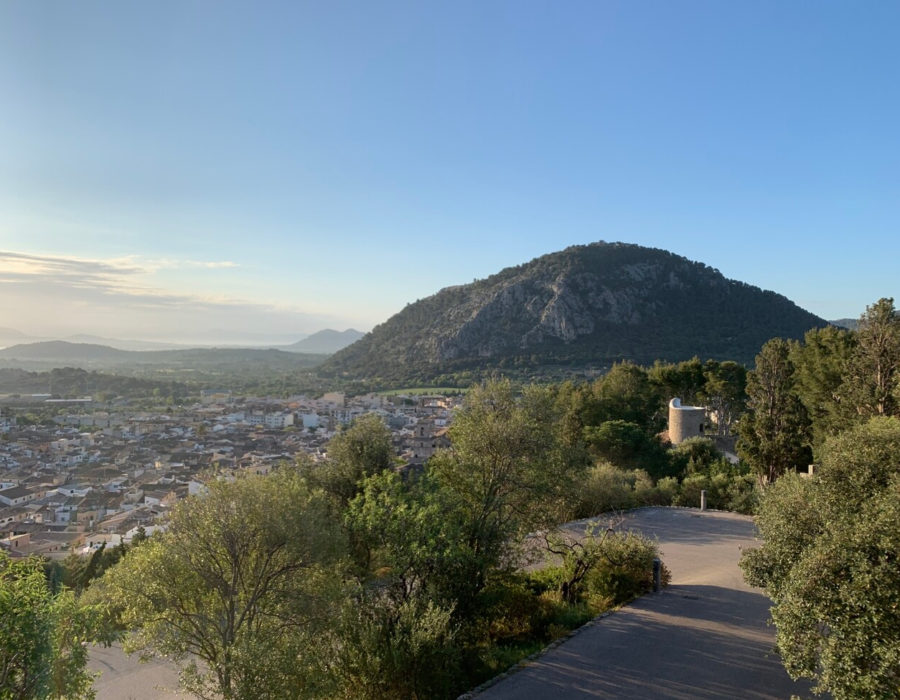
Pollensa’s own mountain. The 330-metre Puig de Maria stands guard over the town, crowned by a fourteenth-century hermitage that once housed a community of nuns. A winding lane and then an old cobbled path climb through holm oaks to the top, where the terrace looks out over the whole of the north — Pollensa’s rooftops, the bay, Formentor beyond. The hermitage serves simple food and drinks, and the walk up makes a perfect late-afternoon ritual, timed so you descend as the light turns gold.
7. Puig de Santuiri
A quieter alternative to Puig de Maria. Santuiri is a small hill just outside Pollensa, and the walk begins at the shaded picnic and barbecue area at its foot. From there the path climbs under holm oaks, with a few steep stretches and steps along the way, so wear sturdy footwear. At the top the view opens almost all the way round: the Bay of Alcúdia, the La Victòria peninsula, the Formentor coastline and the rooftops of Pollensa old town. The approach to the car park can be tricky, so take it slowly.
8. Vall d’en March
For a gentler day, follow the quiet country lane that runs inland from Pollensa along the Vall d’en March toward the mountains. This is rural Mallorca at its most timeless: dry-stone walls, sheep bells, orchards of fig and carob, old fincas dozing under the crags of the Tramuntana. The valley is flat almost throughout, which makes it ideal for families, runners and cyclists as well as walkers. Go in the early morning when the light rakes across the fields and the only traffic is the occasional farmer’s van.
9. The old pilgrim road to Lluc
For centuries, Mallorcans have walked from Pollensa up the Camí Vell de Lluc to the island’s spiritual heart, the Monastery of Lluc, home of the venerated Madonna known as La Moreneta. Today the route forms a stage of the GR-221 long-distance path: a steady climb out of the Vall d’en March, over mountain passes and through ancient holm oak woods, before dropping to the monastery in its high valley. Walk it one way and we can arrange a taxi back — or stay for lunch at Lluc and visit the botanical garden before returning. It is the most complete single day of walking the north can offer.
Practical tips for walking around Pollensa
- Season. Spring and autumn are the finest months for walking. In summer, keep to the shorter routes and the shade of the holm oak woods, and save open, shadeless walks such as Cala Bóquer for cooler days.
- Water. Carry more than you think you need. Only a few routes have somewhere to eat or drink along the way: the hermitages on Puig de Maria and at La Victòria, and the monastery at Lluc.
- Early starts. Set off soon after sunrise for cooler air, softer light and quieter paths.
- Footwear. Wear sturdy shoes with good grip for rocky tracks, cobbled paths and steps, and pack water shoes if you plan to swim at Cala Bóquer.
- Weather. Leave exposed ridges such as Cavall Bernat for dry, settled days.
- One-way walks and guides. On request, we can arrange taxis and transfers for one-way routes such as Lluc, and book a local mountain guide, subject to availability.
Planning an active week? Pair these walks with our guide to cycling in north Mallorca, and cool off afterwards at one of the best beaches in north Mallorca.
Hiking near Pollensa: frequently asked questions
Can you still walk to Castell del Rei and Cala Castell?
Not at present. The town hall stopped issuing walking authorisations for the Ternelles path in January 2018 and, after rulings by the Balearic High Court and the Supreme Court, the barriers remain closed. The Ternelles valley can be visited only on guided visits arranged through the Fundación Vida Silvestre Mediterránea, which do not go to the castle or the cove. Talks to reopen access were under way in December 2025, with no agreement announced by March 2026.
What is the easiest walk near Pollensa?
The Vall d’en March is the gentlest: a quiet country lane, flat almost throughout, 8 km return in about 2–2.5 hours. Cala Bóquer is the classic easy walk to the sea, 6 km return in 1.5–2 hours from Port de Pollença.
When is the best time of year to hike in north Mallorca?
Spring and autumn. In summer, start early, carry plenty of water and choose shorter routes, saving shadeless walks such as Cala Bóquer for cooler days.
Which walks near Pollensa suit families?
The Vall d’en March and Cala Bóquer are both rated easy. Puig de Maria is a short climb, 3 km return, with simple food and drinks at the hermitage on top, and Puig de Santuiri is a quieter hill walk with a picnic area at the start.
Can I walk from Pollensa to Lluc?
Yes. The old pilgrim road, the Camí Vell de Lluc, is a stage of the GR-221: about 18 km one way and 5–6 hours. Walking from Lluc down to Pollensa is the easier direction, as Pollensa to Lluc involves roughly 670 metres of ascent. We can arrange a taxi for the one-way leg.
Do I need a guide for Cavall Bernat?
We recommend one. The ridge involves sustained scrambling on exposed limestone, some route-finding and a head for heights, and it is only for fit, experienced hikers in dry weather. We are happy to arrange a local mountain guide.
Walk from your own front door
Every Pollensina villa sits within minutes of these trails. We provide walking notes and maps at each house, and we are always glad to recommend the right route for your group, book a mountain guide, or arrange transfers for one-way walks like the pilgrim road to Lluc.
See Can Perot near the Vall de March or ask us to plan your walking week.