Iris’s winter guide · Pollença, north Mallorca
From November to March the north of Mallorca belongs to the people who live here. The light is low and golden, the trails are cool, and Pollença keeps its Sunday market, its cafés and its oldest fiestas.
If you are looking for things to do in Pollensa in winter, start by changing the question. This is not a beach holiday with the heat turned down. It is a different trip: a morning walk, a long lunch, a town that is busy with its own life rather than with visitors. Daytime temperatures usually sit in the mid-teens, so you can walk and cycle at midday, which you would never do in August.
These are the ten ideas we give most often to guests who stay with us in the quiet months. They are in no particular order, and several depend on the weather, so we have added notes on what to check before you set out.
Things to do in Pollensa in winter: contents
Choose your kind of winter day
A clear, still day: the Formentor lighthouse road, the Bóquer valley or a long ride on the bike.
A soft, grey day: the Sunday market, the old town and a slow lunch.
The day after heavy rain: Ses Fonts Ufanes, then the monastery at Lluc.
Travelling in January: plan around Sant Antoni on the 17th and Sant Sebastià on the 20th.
Late January and February: almond blossom in the countryside inland.
1. Climb the Calvari steps
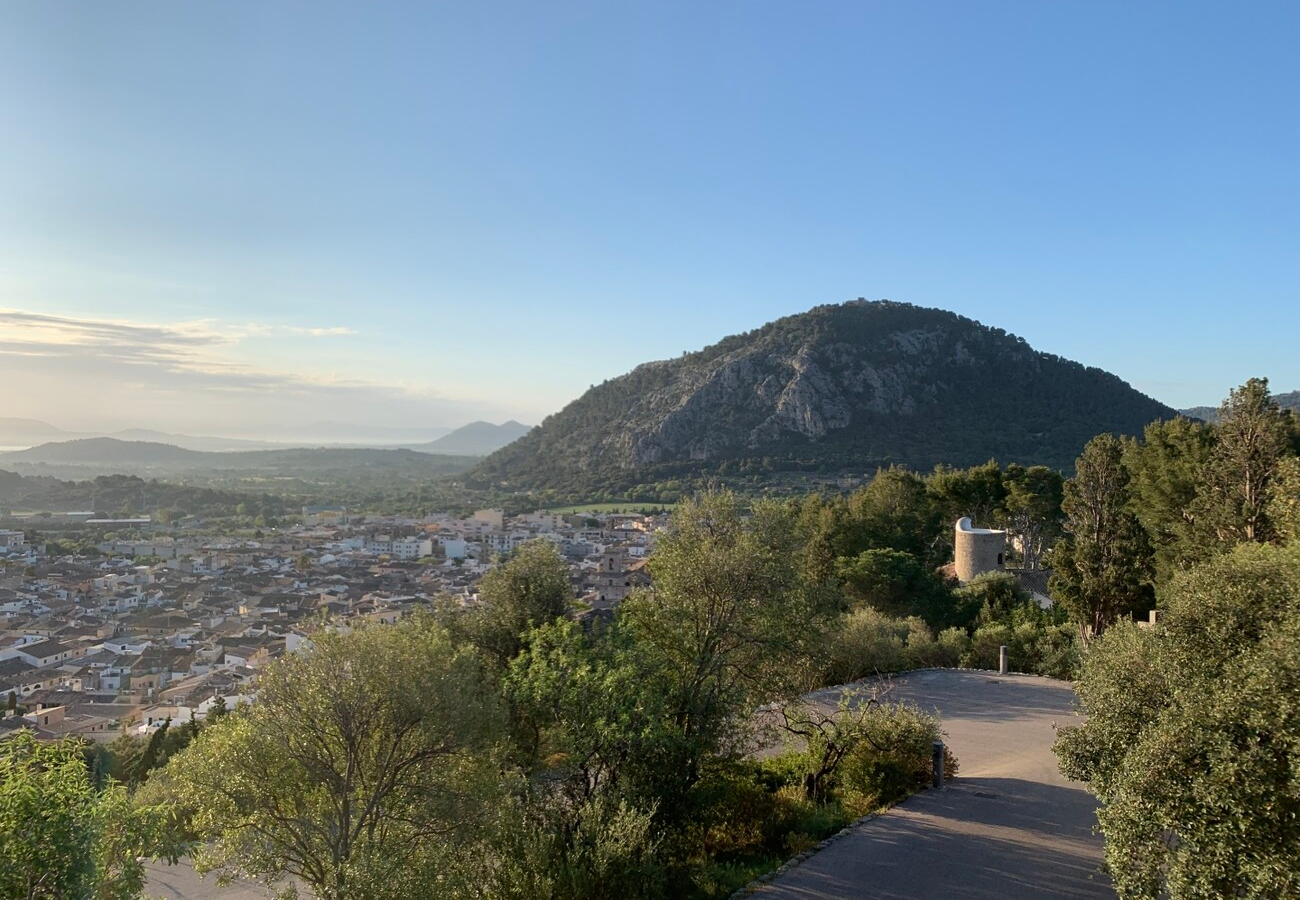
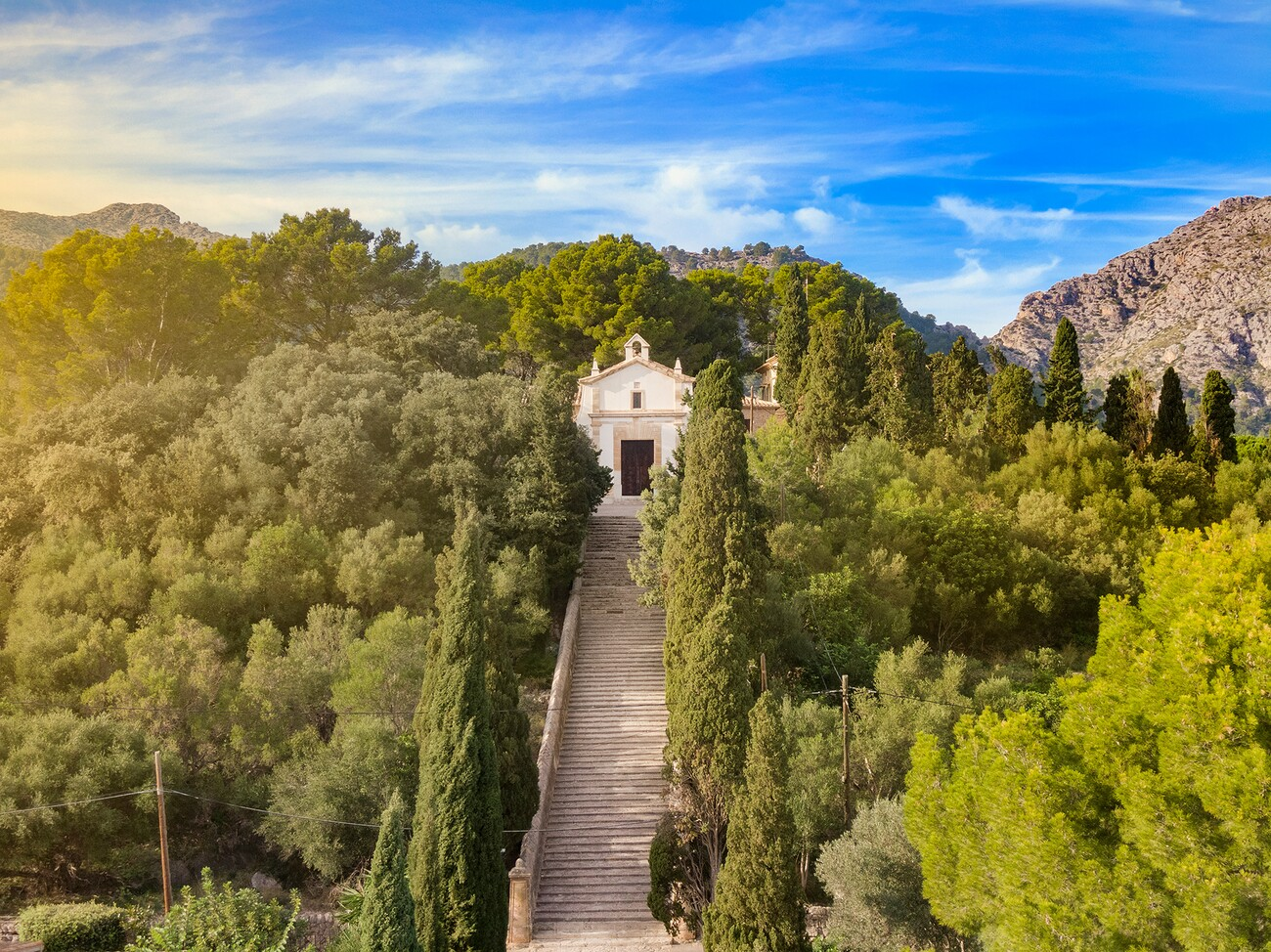
The 365 stone steps of the Calvari rise from the old town between cypress trees to a small chapel. In summer this is a hot climb. In winter it is simply a pleasant walk, and the view from the top takes in the rooftops of Pollença, the Puig de Maria opposite and the two bays beyond.
Go in the last hour of daylight. The winter sun sets early and low, and the stone turns the colour of honey. Walk back down through the lanes rather than the steps and you arrive at Plaça Major in time for a drink.
2. Spend Sunday morning at the market
Pollença’s market runs every Sunday of the year. In winter the stalls are fewer and the crowd is local: people buying vegetables, cheese, olives and bread for the week, then standing in the square to talk. That is the reason to come. You can see what is in season, and you can find a table for coffee without waiting.
Afterwards the old town is open for a wander. Our local guide to Pollença covers the shops, the museums and the places we go ourselves.

3. See Sant Antoni and Sant Sebastià in January
January is when Pollença celebrates for itself. On 17 January, the feast of Sant Antoni, a tall pine is felled in the Ternelles valley, stripped of its bark and carried into town by hand. It is raised in Plaça Vella, beside the parish church, and coated in soap. Then the young people of the town try to climb it. The pine stands around twenty metres high, and the climb can go on late into the night.
The pine comes from the same valley where our Villa Antigua stands. The house dates from 1882 and was the first in Ternelles, so this is a tradition we feel close to.
Three days later, on 20 January, the town honours Sant Sebastià with the cavallets, dancers who wear horse figures around the waist. In most of Mallorca the dancers are children. In Pollença they are adults, and the figures are larger and more elaborate for it.
4. Go looking for almond blossom
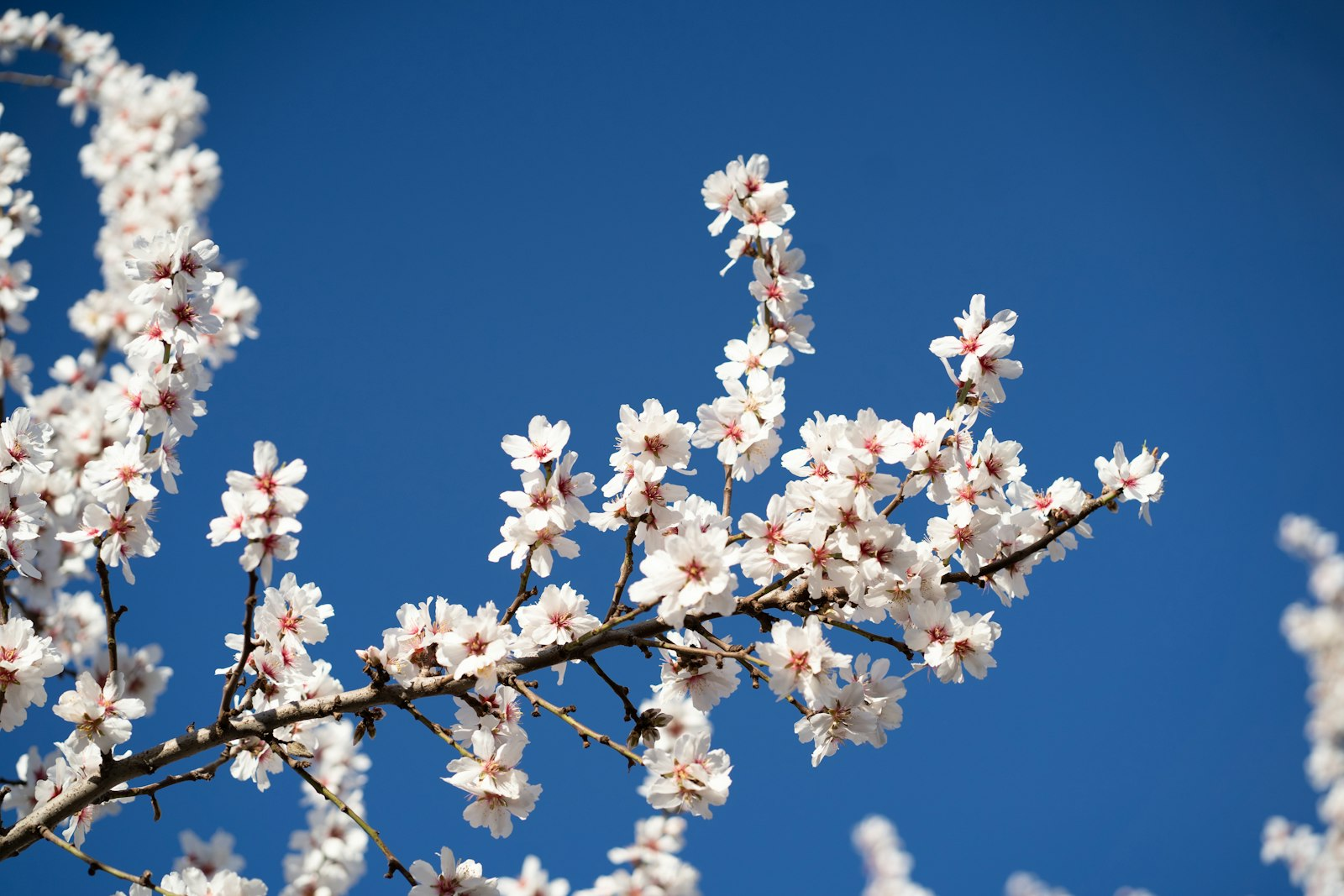
For a few weeks each winter the almond orchards of Mallorca flower white and pale pink. The season usually runs from late January through much of February, and it moves with the weather: a cold start to the winter can bring it forward.
The largest orchards are inland rather than on the north coast. From Pollença, drive south towards Selva, Moscari and Inca, or make a day of it and continue into the central plain. The back roads are the point here, so take the smaller one whenever there is a choice.
5. Walk the Bóquer valley or climb Puig de Maria
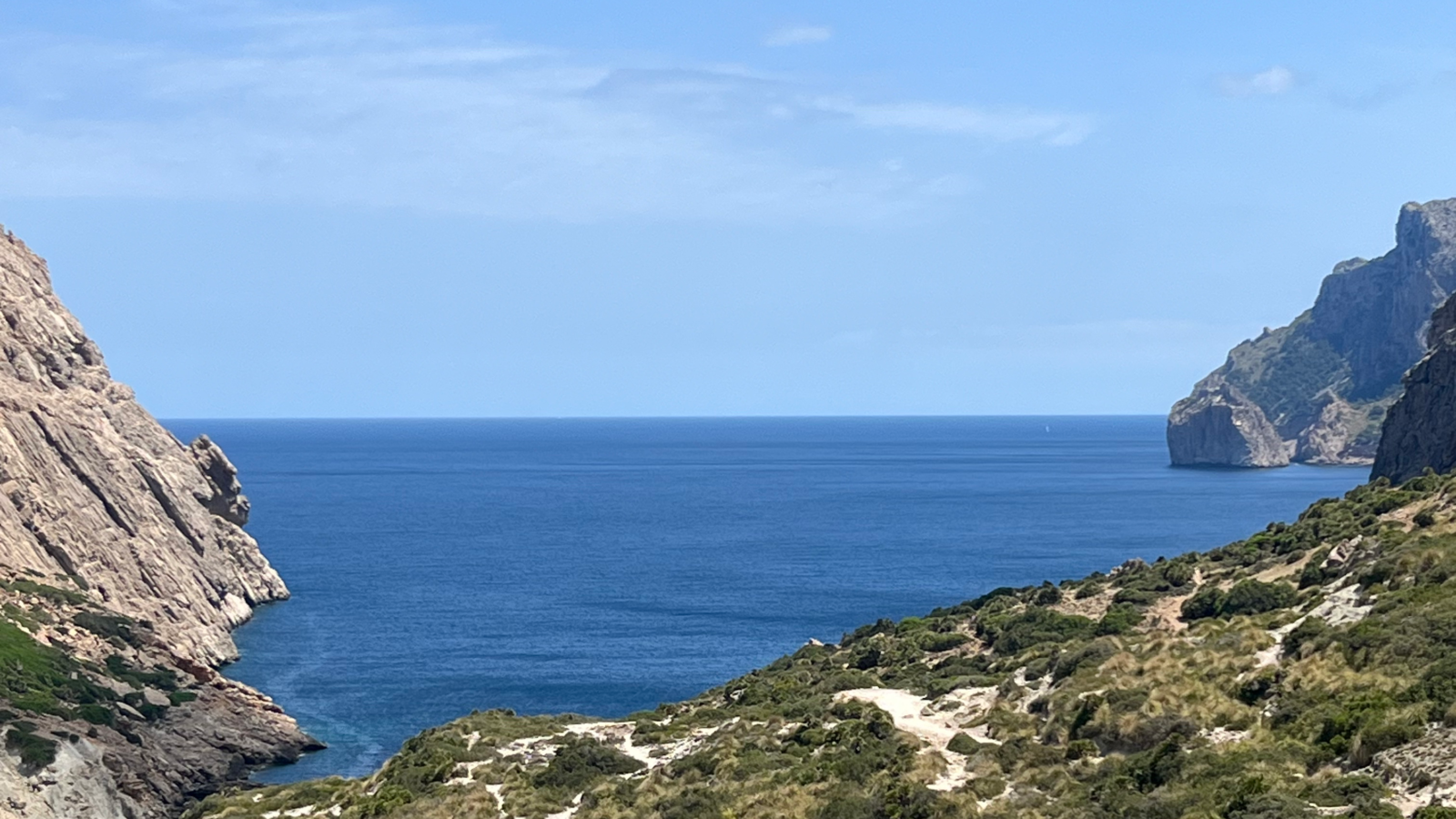
Winter is the walking season in the Serra de Tramuntana. Two routes start almost from the door. The first is the Bóquer valley, which leaves from the edge of Port de Pollença and follows a broad path between limestone ridges to a stony cove. The second is Puig de Maria, the 330-metre hill that faces the Calvari. A narrow road climbs through the trees and gives way to a rocky path near the top; allow 40 to 45 minutes up. The sanctuary at the summit dates from the 14th century and looks over Pollença, the Port and Alcúdia.
After rain the paths are slippery and the limestone is sharp, so wear proper shoes. The days are short, too. Check the time of sunset and start earlier than you would in spring. For longer routes, see our guide to hiking in north Mallorca.
6. Drive to the Formentor lighthouse
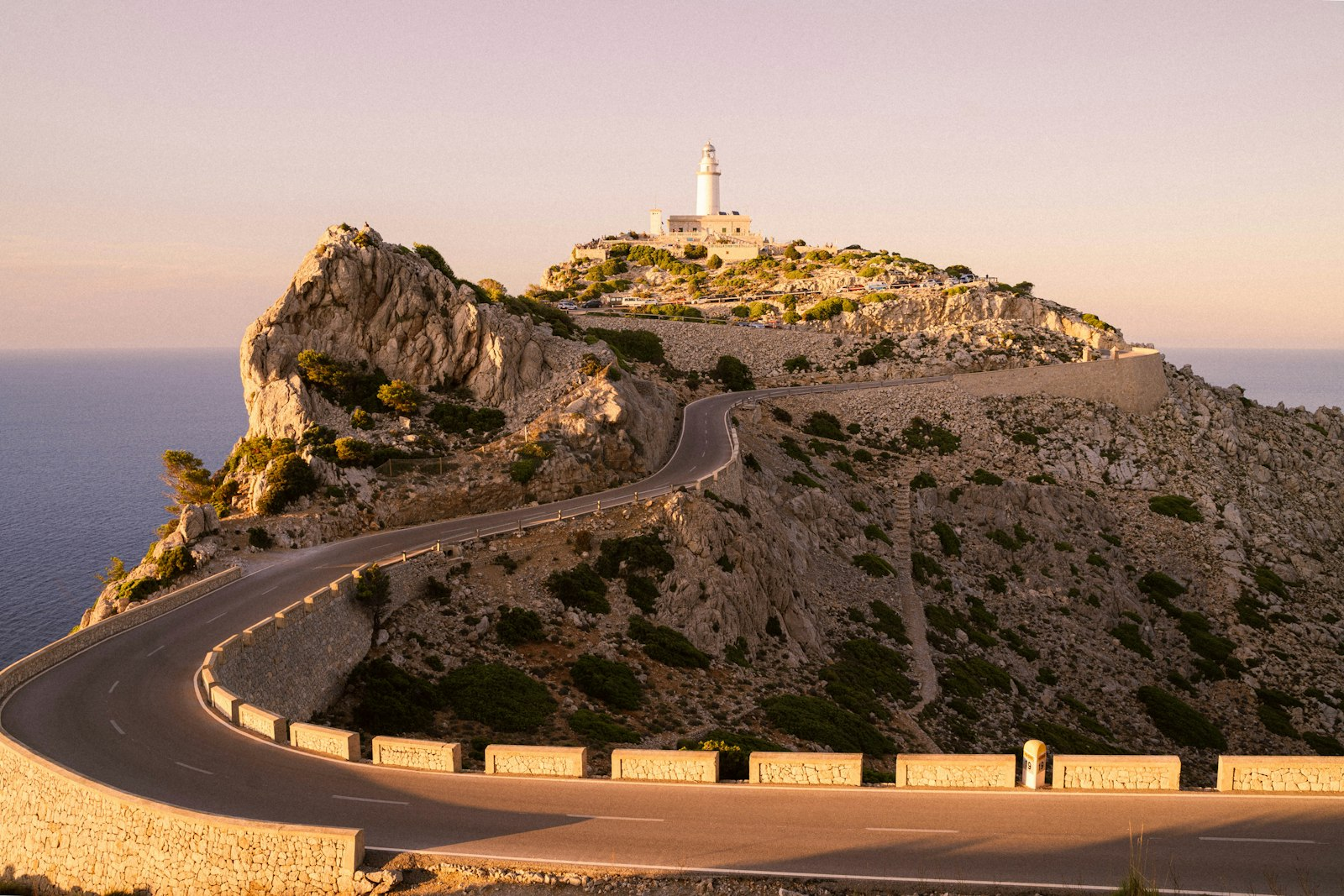
In summer the road along the Formentor peninsula is restricted. In 2026 private cars were not allowed on the final stretch to the lighthouse between 10:00 and 22:00 from 15 May to 18 October. Outside that period you can drive the whole way yourself, stop where you like and have the viewpoints almost to yourself.
The road is narrow and winding, with cyclists on most bends, so take it slowly. Stop first at the Mirador Es Colomer, a few minutes above the Port, then continue through the pines past Formentor beach to the cape.
7. Cycle the quiet roads
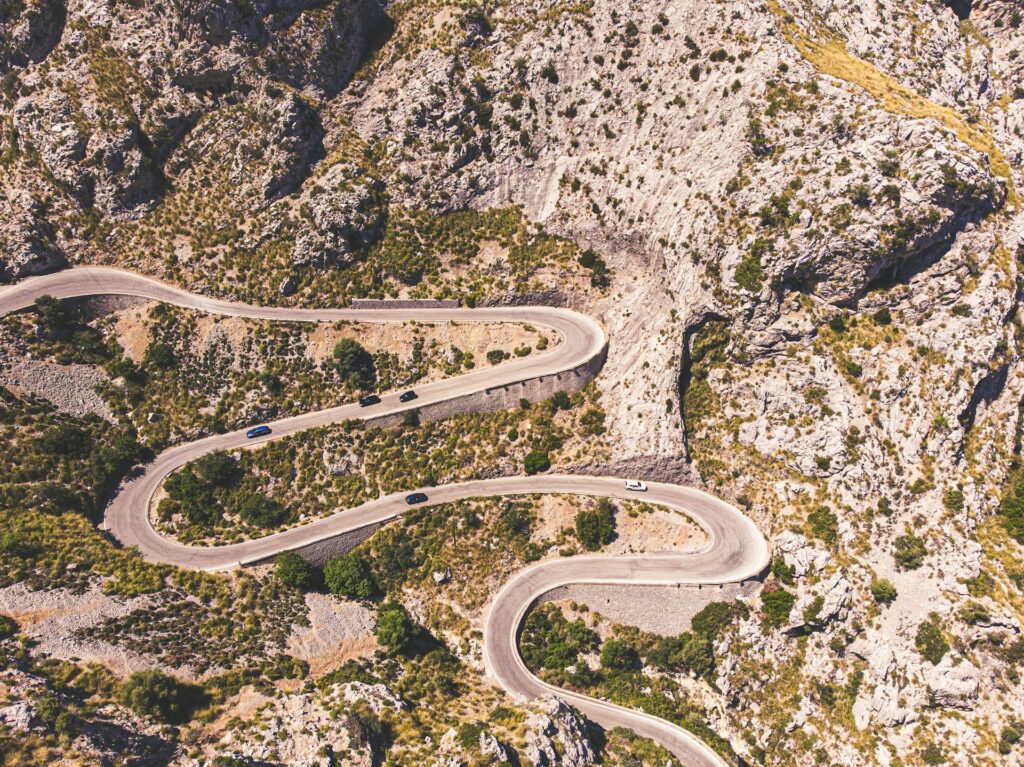
The north of Mallorca is one of Europe’s best-known cycling bases, and the mild winter is a large part of the reason. You can ride at midday in comfort, and the roads carry very little traffic. Flat lanes lead from Pollença towards the bay and the wetlands. The climbs of the Tramuntana begin just behind the town.
Our guide to cycling in north Mallorca describes the routes to Formentor and Sa Calobra and what to look for in a villa if you are bringing bikes.
8. Have a beach to yourself
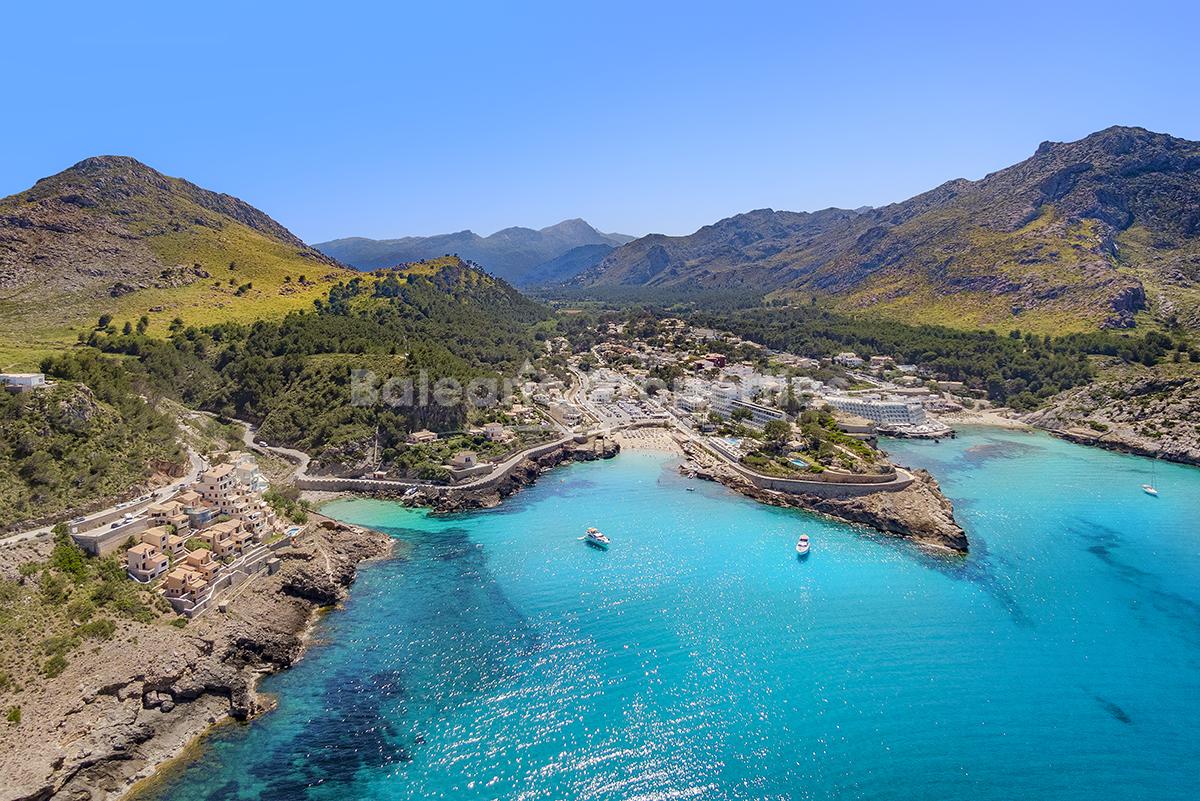
Nobody comes to Pollença in January to swim, although a few brave people do. Come to the coast to walk. The Pine Walk in Port de Pollença follows the water beneath old pines, with the mountains closing the view. Further round the bay, the sand at Llenaire is wide and empty, and at Cala Sant Vicenç the winter swell breaks against the rocks.
All ten places in our guide to the best beaches in north Mallorca are worth seeing out of season. Just do not expect sunbeds or kiosks; most beach services close for the winter.
9. Watch the birds in S’Albufera
S’Albufera is the largest wetland in the Balearics, on the Bay of Alcúdia. Winter is a good season to visit, because many waterbirds spend the cold months here and marsh harriers hunt over the reeds. The paths are flat and suitable for all ages, on foot or by bicycle, with hides along the way.
Cars stay outside. You enter over the Pont dels Anglesos on the Ma-12 at Playa de Muro and collect a free permit at the reception centre, which is open from 9:00 to 16:00.
10. After the rain: Ses Fonts Ufanes and Lluc
Winter brings rain, and one of the island’s strangest sights depends on it. At Ses Fonts Ufanes, near Campanet, water bursts out of the forest floor after heavy rainfall and runs through the oak wood as a stream. A few days later it is gone. The springs lie on the public estate of Gabellí Petit, about twenty minutes on foot along an easy path from the car park. The estate is open daily from 10:00 to 17:00.
From there the road climbs into the Tramuntana to the monastery of Lluc, the spiritual centre of Mallorca. On a cold day the highest peaks sometimes carry snow, and the monastery courtyard is a good place to warm up before the drive home.
The winter table
Mallorcan cooking is at its best in the cold months. Look for arròs brut, a spiced rice broth with meat and vegetables, and sopes mallorquines, a dish of vegetables and thin bread that is closer to a stew than a soup. Both are winter food, and both suit a long lunch after a walk.
Not every restaurant stays open. Many places in Port de Pollença close for some weeks between November and February, while the old town keeps more of its tables. Tell us your dates and we will let you know who is open. If you would rather stay in, a private chef can cook dinner at your villa. For a day among the vineyards, see our wine route and ask us to check visiting times before you go.
Winter dates worth knowing
| When | What | Where |
|---|---|---|
| Mid-November | Fira de Pollença, the autumn fair and craft exhibition | Pollença old town |
| 24 December | Cant de la Sibil·la, a medieval chant sung at midnight mass and recognised by UNESCO in 2010 | Churches across Mallorca, and the sanctuary of Lluc |
| 5 January | The Three Kings parade, the evening children wait for all year | Towns across the island |
| 17 January | Sant Antoni and the climbing of the pine | Plaça Vella, Pollença |
| 20 January | Sant Sebastià and the cavallets | Pollença old town |
| Late January to February | Almond blossom | Inland Mallorca |
| Every Sunday | Weekly market | Plaça Major, Pollença |
Programmes and times are published by the Ajuntament de Pollença shortly before each event. Please confirm before you travel.
Winter weather in Pollensa
Expect mild days, cool nights and a mix of sun and rain. These are long-term averages for Port de Pollença; a given week can be warmer or wetter.
| Month | Day | Night | Sea | Sun per day |
|---|---|---|---|---|
| November | 18 °C | 10 °C | 19 °C | 5 hours |
| December | 15 °C | 8 °C | 16 °C | 4 hours |
| January | 14 °C | 6 °C | 14 °C | 5 hours |
| February | 15 °C | 6 °C | 14 °C | 5 hours |
| March | 16 °C | 7 °C | 14 °C | 6 hours |
Pack layers, a waterproof jacket and shoes with a proper sole. Stone houses are cool inside, so ask about the heating in your villa when you book, and whether pool heating is available for your dates.
Frequently asked questions
Is Pollensa worth visiting in winter?
Yes, if you want walking, cycling, food and local life rather than a beach holiday. The old town stays lived-in all year, the Sunday market continues, and January brings Pollença’s most distinctive fiestas. Some restaurants and most beach services close for part of the season.
How warm is Pollensa in winter?
Average daytime temperatures are around 14 to 15 °C in December, January and February, with nights of 6 to 8 °C. November and March are a little warmer. Sunny days feel warmer than the figures suggest; windy or wet days feel colder.
Can you swim in Pollensa in winter?
The sea cools to about 14 °C by January, so most visitors do not swim. Some of our villas offer pool heating as an option. It is not included automatically, and an outdoor pool will not hold a fixed temperature in cold weather, so please ask us before you book.
Can you drive to the Formentor lighthouse in winter?
Yes. The traffic restriction on the peninsula applies in the warmer months only. In 2026 it ran from 15 May to 18 October, between 10:00 and 22:00. Dates are set each year, so check them if you travel close to the start or end of the season.
When is the almond blossom in Mallorca?
Usually from late January through much of February. The timing depends on the weather and can shift by a couple of weeks from one year to the next.
Are restaurants and shops open in Pollensa in winter?
Pollença old town keeps a good number of shops, cafés and restaurants open all year. Port de Pollença is quieter, and many places there close for several weeks. Ask us before you travel and we will tell you who is open.
Stay in Pollensa this winter
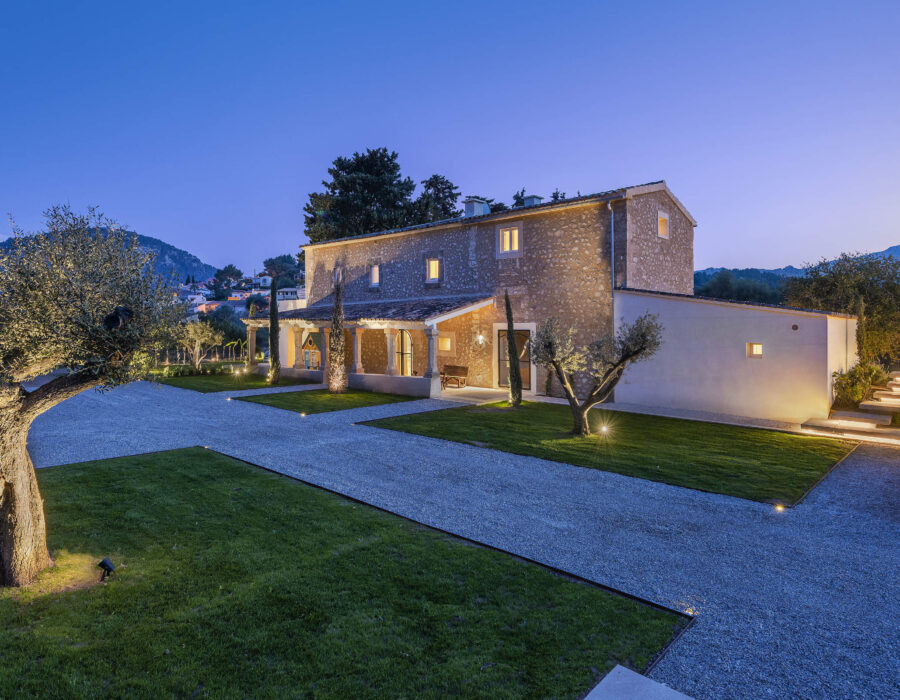
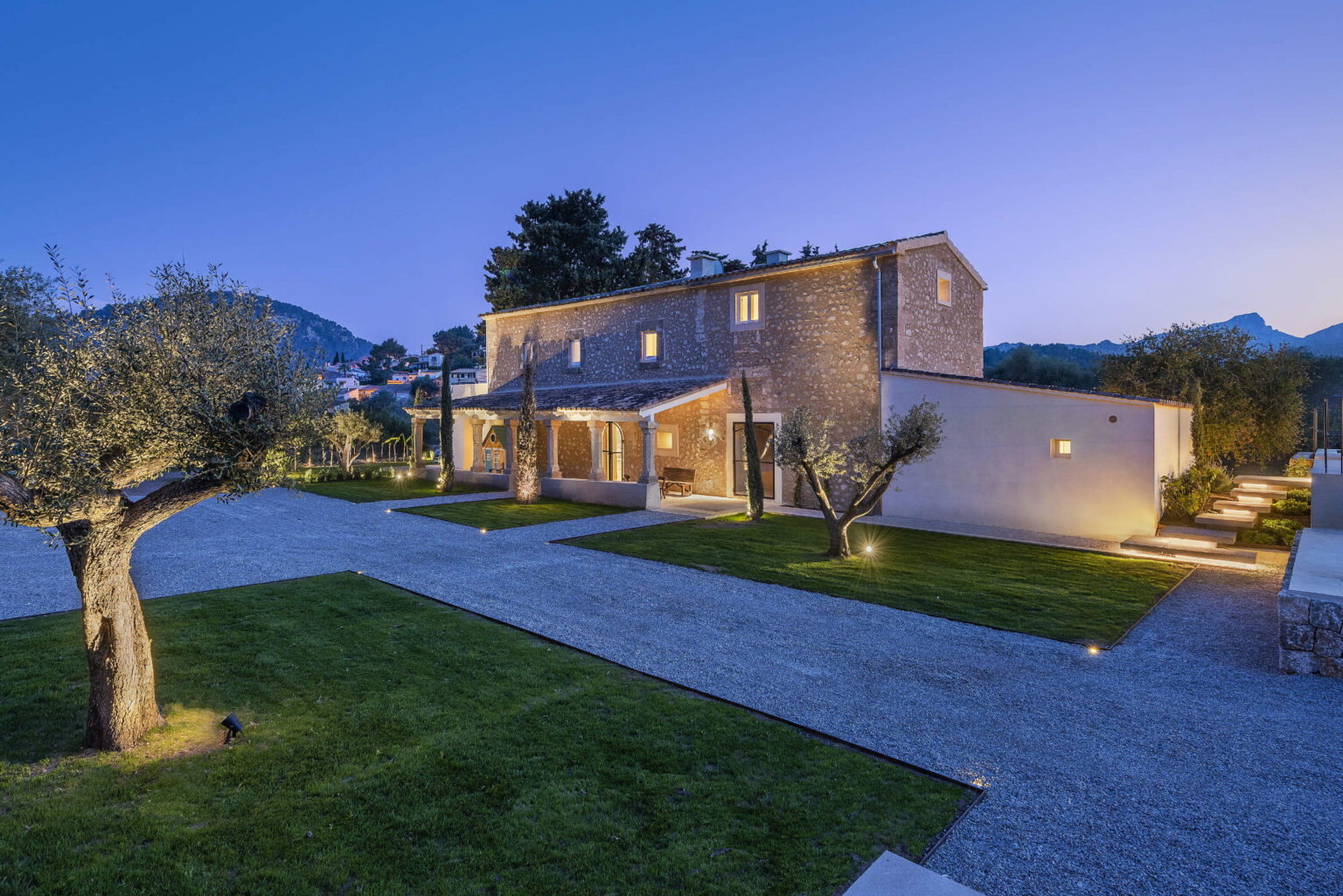
Our homes in and around Pollença give you a kitchen, a garden and room to settle in for a week or longer. In winter that matters more than a sunbed.
See the villas within walking distance of the old town, the villas with a heated pool option, or the whole Pollensina collection. For availability and advice on the right house for your dates, write to us.
Updated 7 October 2026. Opening hours and access rules: Govern de les Illes Balears (S’Albufera, Ses Fonts Ufanes) and the 2026 Formentor traffic regulation. Climate figures are long-term averages. Fiesta programmes for winter 2026/27 had not been published when we wrote this, so times are not given.